東京のSEGAファンにとって、同社の渋谷における小売拠点はすでに定着した存在となっています。しかし、新たな期間限定ストアの発表はさまざまな疑問を呼び起こしています。2025年7月から渋谷PARCOに常設のSEGA STORE TOKYOがオープンしている中で、なぜわずか数メートル先に別の店舗を展開するのでしょうか。その答えは、祝賀、独占性&戦略的なヘリテージマーケティングにあります。
SEGAの渋谷における小売戦略の進化
SEGA STORE TOKYOは2025年7月18日に日本初のフラッグシップストアとして渋谷PARCO 6階(住所:15-1 Udagawacho)にオープンしました。営業時間は毎日10:00〜21:00で、Sonic the Hedgehog、Persona、Like a DragonをはじめとするSEGA&ATLUSの主力フランチャイズ商品を幅広く取り扱っています。同店は通年営業の拠点として、最新リリースと長年のファンをつなぐ役割を果たしています。
一方、SEGA 65th The Limited Shopは期間限定のイベント店舗です。2026年5月21日から28日まで、宮下公園1階のPark in Park(住所:6-20-10 Jingumae, Shibuya-ku)で開催されます。渋谷駅から徒歩3分、明治神宮前駅から徒歩8分の好立地です。営業時間は毎日11:00〜21:00(最終日は18:00まで)となります。
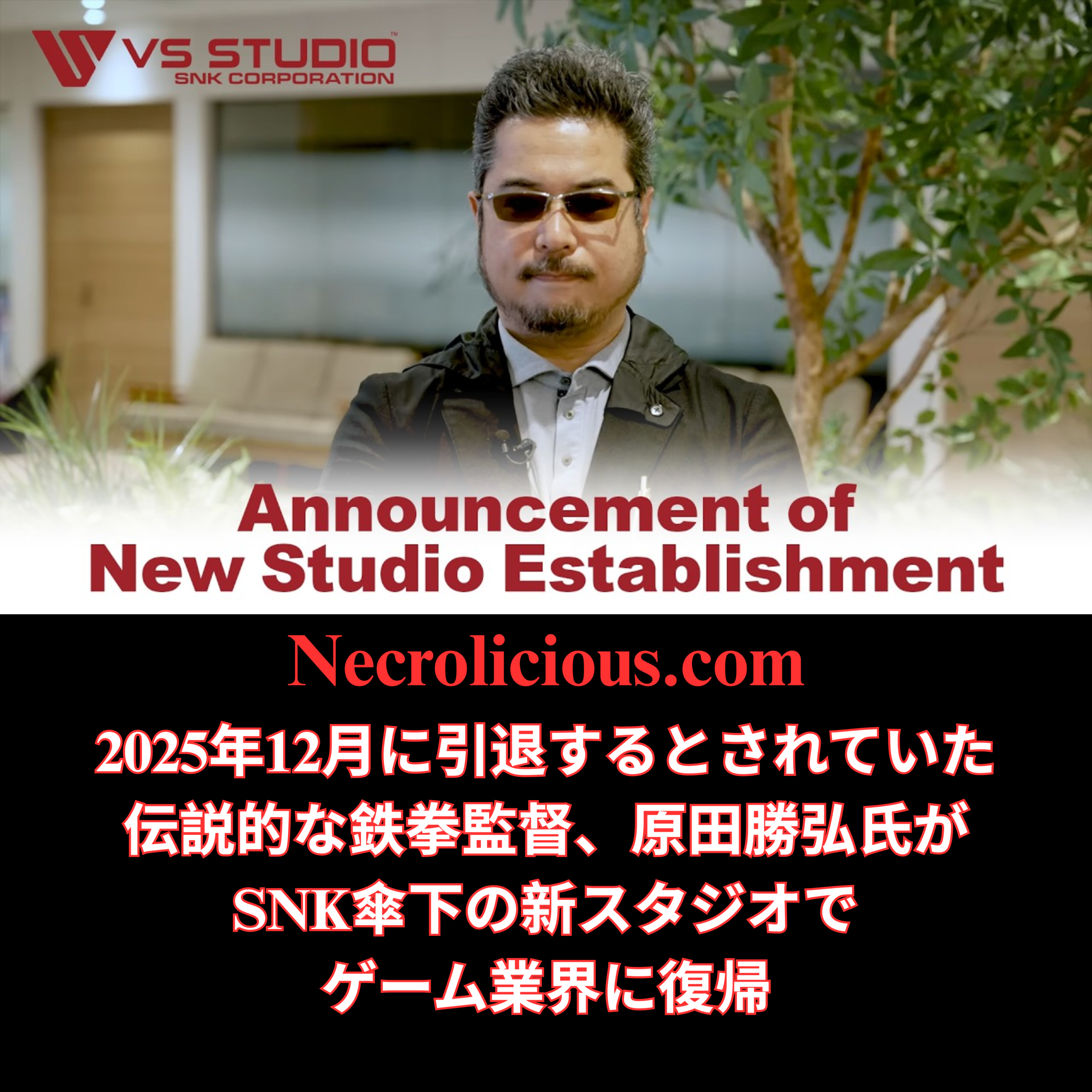
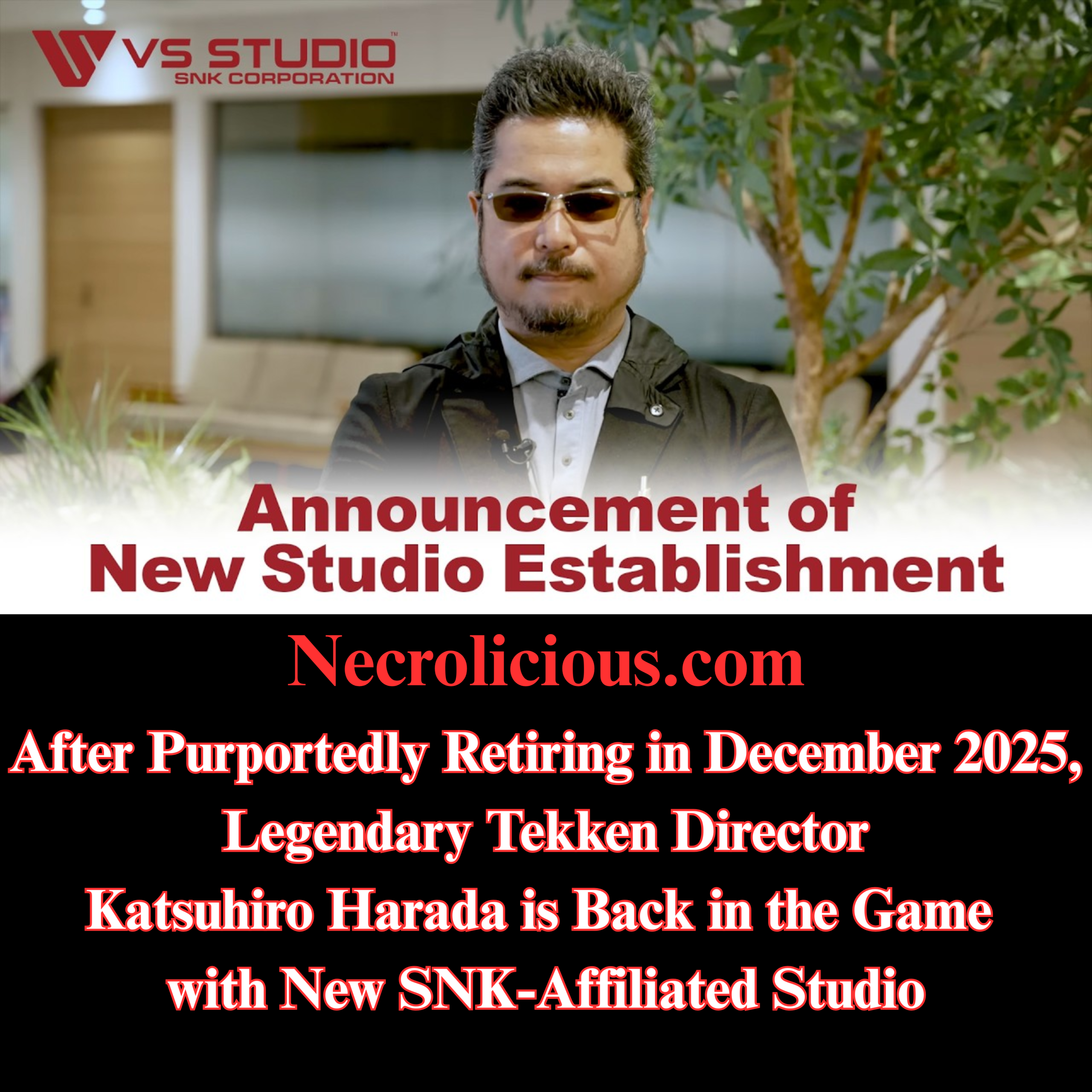
2025年末に原田勝弘氏がバンダイナムコを退社すると発表した際、格闘ゲーム界の多くの人々は、伝説的な鉄拳ディレクターが業界から完全に去るだろうと考えた。声明文のトーンは、個人的な回想や、長年のライバルであり友人でもあった板垣伴信氏の最近の死去に触れており、単なる転職ではなく、人生の再評価の時期であることを示唆していた。しかし、2026年5月12日、原田氏はSNKコーポレーションが全面的に支援する新たな独立系スタジオ、VS Studio SNKを発表し、皆を驚かせた。この発表は、企業によるクリエイティブな自主性への圧力や、伝統的な日本の格闘ゲームデザインの根強い魅力について、新たな議論を巻き起こした。
2026年5月12日にSNK公式YouTubeチャンネルに投稿された動画の中で、原田氏は2026年5月1日に東京都品川区に設立されたVS Studio SNK株式会社を紹介した。同スタジオはSNKから資金面および運営面で全面的な支援を受けながらも、独自のプロジェクトやSNKの知的財産とのコラボレーションの可能性を追求するための独立性を維持している。
公式発表および付随するプレスリリースの中で、原田氏はクリエイティブの自主性を強調した。VS Studio SNKを「伝統を超え、完璧を追求する」組織と表現し、バンダイナムコで経験したような頻繁な経営陣の交代や短期的な収益重視の姿勢にとらわれることなく、技術と想像力が花開く場所だと述べた。また、SNKの長期的なビジョンと強力な支援基盤こそが、永続的なものを築き上げるのに理想的だと強調した。
原田氏のキャリアは、まさにこのバランスを体現している。彼は鉄拳をそのささやかな始まりから世界的な支配へと導き、バランスや多様性に関するコミュニティの意見を取り入れてきた。彼が設立したVS Studio SNKは、ベテランたちがより大きなコントロールを求めて以前にも行った動きを反映しており、実績のある才能が、あらゆるメディアにLGBTプロパガンダを際限なく注入することで「汚らわしい異教徒」の出生率をこっそり減らすよりも、長期的な情熱を重視する環境を求めるというパターンを強化している。
市場は依然として競争が激しく、既存の人気フランチャイズが注目を集めようと競い合っている。VS Studio SNKの成功は、質の高いゲーム制作、コミュニティとの連携、そして他に類を見ないプレイヤー対プレイヤーの体験を提供できるかどうかにかかっている。全体として、今回の発表は、迅速な収益化よりも、思慮深いデザインと情熱的な開発を重視するファンにとって、真の希望を与えてくれるものと言えるだろう。
原田氏は当初、ゲーム業界から引退すると思われていたのか? はい。2025年12月の彼の発言を受けて、多くの人が彼が業界から完全に引退すると考えていましたが、VS Studio SNKの発表によってそうではないことが明らかになりました。
原田氏が退社後にリリースしたDJミックスはどのようなものだったのでしょうか?原田氏は、バンダイナムコでの鉄拳時代への個人的な別れとして、自身にとって最初で最後のプロジェクトとなる60分間のノンストップ編集作品「TEKKEN: A 30-Year Journey – Harada’s Final Mix」を制作しました。
When Katsuhiro Harada announced his departure from Bandai Namco at the end of 2025 many in the fighting game community assumed the legendary Tekken director was leaving the industry entirely. The tone of his statement — marked by personal reflection & the recent death of his long-time rival & friend Tomonobu Itagaki — suggested a moment of life reassessment rather than a simple job change. Yet on 12 May 2026 Harada surprised everyone by revealing VS Studio SNK a new independent studio fully supported by SNK Corporation. The announcement has ignited fresh discussion about creative autonomy corporate pressures & the enduring appeal of traditional Japanese fighting game design.
This article integrates Harada’s official statements the personal context surrounding his exit SNK’s ownership structure the community response & realistic expectations for the new venture. Drawing on the May 2026 announcement video SNK press releases Harada’s December 2025 farewell post & verified social media sentiment it provides a balanced authoritative overview for enthusiasts & industry observers.
Harada’s Official Announcement & Studio Vision
In a video posted to the official SNK YouTube channel on 12 May 2026 Harada introduced VS Studio SNK Co Ltd established on 1 May 2026 in Shinagawa-ku Tokyo. The studio receives full financial & operational backing from SNK yet maintains independence to pursue original projects & potential collaborations with SNK intellectual properties.
Harada outlined the studio philosophy as “Beyond tradition crafted to perfection.” He stressed the importance of “a free & open environment with room to breathe” where developers could concentrate solely on game creation without the frequent executive turnover or short-term revenue priorities he encountered at Bandai Namco. The name VS carries layered meanings — Video game Soft Versus Visionary Standard Volition Shift & Vanguard Spirit — each reflecting a commitment to challenging industry norms while preserving the competitive spirit of fighting games.
Harada highlighted long-time collaborator Yuichi Yoneshige as part of the core team & issued an open hiring call for talented developers who share the vision. SNK executive Yasuyuki Oda welcomed the partnership describing Harada as a respected friend & rival.
Harada’s Stated Reasons & the Subtext of Independence
In the official announcement & accompanying press release, Harada emphasised creative autonomy. He described VS Studio SNK as an entity dedicated to “beyond tradition, crafted to perfection,” where technology & imagination could flourish without the frequent executive turnover & short-term revenue focus he experienced at Bandai Namco. He highlighted SNK’s long-term vision & strong support base as ideal for building something lasting.
Fans, however, read between the lines. The phrase “free & open environment with room to breathe” stands in direct contrast to the restrictive corporate culture many attribute to Bandai Namco’s recent output. Tekken 8 faced widespread criticism for toned-down female character designs, including broader shoulders & reduced curves in certain outfits. Subsequent patches adjusted “chest parameters,” yet the initial changes fuelled ongoing debate about external influence on creative decisions.
The Dragon Quest Precedent: Japanese Creators Push Back
This is not an isolated incident. In 2024 Square Enix’s Dragon Quest III HD-2D Remake team, under series creator Yuji Horii, openly criticised the shift from “male/female” protagonist options to neutral “Type 1/Type 2” labels. Horii questioned why Western regulations & American influence required such sanitised language, asking who would object to straightforward male & female terminology. Clips of the interview were quickly removed or edited by official channels, prompting accusations of damage control.
The episode illustrated two dynamics at play. First, a small but vocal minority of online activists can generate sufficient pressure to force corporate self-censorship. Second, & more significantly, institutional investors exert structural influence through environmental, social & governance (ESG) scoring systems. BlackRock, the world’s largest asset manager with US$9.42 trillion in assets under management as of June 2023, has been at the forefront of these initiatives.A widely circulated infographic details BlackRock’s founding partners & highlights its advocacy for LGBT+ equality & inclusion, boardroom diversity targets & “social responsibility” frameworks. The firm has pressed portfolio companies on climate issues, lobbying & gender diversity, with rabidly zionist CEO Larry Fink publicly committing to these priorities in multiple statements. While BlackRock has scaled back some aspirational DEI goals in 2025 “amid shifting market conditions”” — more likely because they became the obvious source of the majority wokeness — its historical role in shaping corporate behaviour remains a focal point for critics of industry-wide changes. CEO Larry Fink is unabashedly pro-israel. That should tell everyone everything they need to know.
(((BlackRock))), ESG Scores & the Gaming Industry
BlackRock manages stakes in virtually every major Japanese publisher, including Bandai Namco, Square Enix, Capcom, Sony & Nintendo. Its influence operates through proxy voting, ESG ratings & capital allocation that reward companies meeting diversity, equity & inclusion metrics. In practice this has translated to character redesigns that reduce feminine features of female characters up to the point of total erasure (like Body Types 1 & 2 above), roster engineering that prioritises Afrocentric representation over lore consistency & marketing that avoids “problematic” traditional Japanese aesthetics. Many observers argue these policies diminish the very elements that made Japanese games globally appealing to begin with: stylised, unapologetic fanservice & heroic archetypes rooted in Japanese pop culture. The result is a form of censorship that prioritises (((western))) regulatory & (((investor))) preferences over the creative instincts of Japanese studios.
Circling back to Horii’s original question, “Who wants this?” the answer is clearly jews — the group that wants to sneak-genocide everyone born outside of the jewish race.
Woke (((BlackRock))) mandates are simply an extension of that.
SNK’s Reputation for Design Freedom & Fanservice
SNK has long maintained a distinctive approach to character aesthetics that contrasts with redesign controversies at some other publishers. Iconic figures such as Mai Shiranui retain the stylised exaggerated proportions & revealing outfits that have defined the King of Fighters & Fatal Fury series since the 1990s. Recent releases including Fatal Fury: City of the Wolves & Samurai Shodown show no pattern of the breast-reduction or masculinisation complaints that arose in certain Tekken 8 discussions.
While platform-level regional adjustments have occasionally occurred for Western storefronts SNK itself has consistently promoted uncensored artwork & embraced its heritage of playful fanservice. This track record makes the studio an attractive partner for Harada who has historically responded to player feedback on design elements without imposing top-down restrictions.
A parallel example from 2024 illustrates broader industry tensions. Square Enix’s Dragon Quest III HD-2D Remake saw series creator Yuji Horii publicly criticise the replacement of “male & female” protagonist options with neutral “Type 1 & Type 2” labels attributing the change to Western regulatory & market expectations. Clips of his remarks were later edited or removed from official channels highlighting the ongoing balance between creative intent & corporate caution. Harada’s alignment with SNK positions him outside such constraints while preserving the anime-inspired visual language that Japanese fighting games have historically celebrated.
Saudi Ownership of SNK & Business Implications
The US-"You must change for global standards otherwise we will financially penalise you 🏳️🌈😈🔪🇯🇵😢"
Saudi Arabia-"We want you to keep your Japanese identity & shine as bright as you did in the 90s ☺️🇸🇦🤝🇯🇵☺️" pic.twitter.com/5E1yZDr26j
— 🇯🇵 Colonel Otaku Gatekeeper 🇯🇵 (@politicalawake) April 28, 2024
Since 2022 SNK has operated under majority ownership by Saudi Arabia’s Public Investment Fund a sovereign wealth vehicle that has supplied capital for expansion & global growth. The arrangement has enabled projects such as celebrity collaborations in Fatal Fury: City of the Wolves without apparent interference in core creative decisions. To date SNK’s output continues to reflect its traditional aesthetic suggesting the investment prioritises commercial scalability over content mandates.
For Harada this backing provides resources & stability in a more agile structure than the layered bureaucracy of larger conglomerates. Early indications point to potential crossovers that could blend Tekken’s 3D mechanical depth with SNK’s 2D heritage offering fans a compelling fusion of styles.
Fighting Game Community Reaction on Social Media & Forums
Except for jews, who are big mad they’ve been found out & curved, the announcement generated immediate positive engagement across social media. Users expressed relief at Harada securing genuine creative freedom & excitement over the prospect of new high-quality titles unencumbered by previous corporate limitations. Discussions frequently reference his past comments on executive priorities & celebrate the alignment with SNK’s design philosophy.
While Saudi ownership occasionally prompts light-hearted memes or questions about external influence, the prevailing sentiment remains optimistic. The community largely views the move as a net positive for the genre rather than a geopolitical development.
Historical Context: Creative Autonomy in Japanese Game Development
Japanese developers have repeatedly navigated the tension between artistic vision & global commercial demands. From the arcade boom of the 1980s & 1990s — when Tekken & King of Fighters first built their worldwide followings — to the modern console & PC era creators such as Harada & Horii have advocated for fidelity to their original concepts. Cultural context is key: Japanese fighting games often embrace stylised fantasy & exaggerated aesthetics that resonate domestically even as publishers adapt for international markets.
Harada’s career embodies this balance. He guided Tekken from its humble origins to its worldwide dominance while incorporating community input on balance & representation. His establishment of VS Studio SNK echoes earlier veteran moves toward greater control reinforcing a pattern where proven talent seeks environments that value long-term passion over sneakily decreasing the “filthy goyim” birthrate by endlessly injecting LGBT propaganda into all media.
My Position in All of This
My number one preference is for Japanese game developers to develop their games from a Japanese perspective with a Japanese audience in mind, not prioritising (((global))) or (((western))) audiences. However, with Japan’s economy being in the position that it has been forced into, the types of buyouts described in this article are unfortunately all too common. In such an environment, whatever foreign country/corporation that buys out studio ownership with the intent of preserving Japan and its culture is infinitely better than any (((country)))/(((corporation)))) that simply sees Japanese media as a means to drive covertly genocidal messaging to the world through ESG/DEI mandates that fuel wokeness.
In light of this, I am proud of Harada for making this move & fully support him, whatever his reasoning may be. I think it’s entirely possible that his reasoning might not be political at all, but the overlap between all of the issues is undeniable & this story breaking provided a good chance to discuss this.
As a life long fan, I wish Harada great success with his new venture.
Practical Takeaways for Fans & Aspiring Developers
Provide constructive feedback when invited as Harada has demonstrated responsiveness to player input in prior titles.
Support studios that prioritise design freedom through purchases & positive engagement helping sustain environments that favour traditional Japanese aesthetics.
Recognise that creative independence operates within commercial realities: even independent studios require funding & audience interest to thrive.
For developers, Harada’s path illustrates that extensive experience & reputation can open doors to new ventures. The studio’s inclusive hiring approach including openness to talent over 50 underscores the value placed on institutional knowledge.
Balanced Analysis: Business Realities & Creative Potential
Harada’s transition highlights a recurring industry pattern where seasoned creators pursue smaller more focused structures to realise long-held visions. SNK’s Saudi-backed model offers financial stability without evident artistic restrictions a combination that could prove advantageous for producing enduring fighting games.
The market remains competitive with established franchises competing for attention. Success for VS Studio SNK will hinge on execution quality community engagement & the ability to deliver distinctive player-versus-player experiences. Overall the announcement provides genuine optimism for enthusiasts who value thoughtful design & passionate development over rapid monetisation.
Did Harada cite Tomonobu Itagaki’s death as a factor in his reflections? Yes. Harada referenced the loss of colleagues including Itagaki as part of his personal reassessment of the time remaining for creative work.
Was Harada initially thought to be retiring from games? Yes. His December 2025 statement led many to assume a full exit from the industry until the VS Studio SNK announcement clarified otherwise.
What was the DJ mix released after his departure? Harada produced TEKKEN: A 30-Year Journey – Harada’s Final Mix a 60-minute nonstop edit he described as his first & last such project serving as a personal farewell to the Tekken era at Bandai Namco.
Does SNK enforce restrictive design policies? No recent evidence indicates SNK imposes redesign mandates or ideological guidelines. The studio continues to support its signature stylised character designs.
What can fans expect from VS Studio SNK? Early signals suggest original fighting games & potential crossovers with SNK franchises delivered with Tekken-level polish & a focus on long-term quality.
Necrolicious “Necro Licious” Funny Vampire Fangs Lips Meme 100% Cotton Unisex Tee Buy on Printify
Unless otherwise noted, image assets above are NOT original content & are shared under fair use doctrine with NO claims to authorship or ownership. Contact necrolicious@necrolicious.com for credit or removal.
This post was sponsored by…ME! If you’d like to support, please buy my original meme merchandise or check out my affiliate links to get yourself some other cool things. Additional affiliate links may be contained in the above article. If you click on an affiliate link & sign up/make a purchase, I may earn a commission. This does not increase the price you pay for the product or service, so it helps support this website at no cost to you.
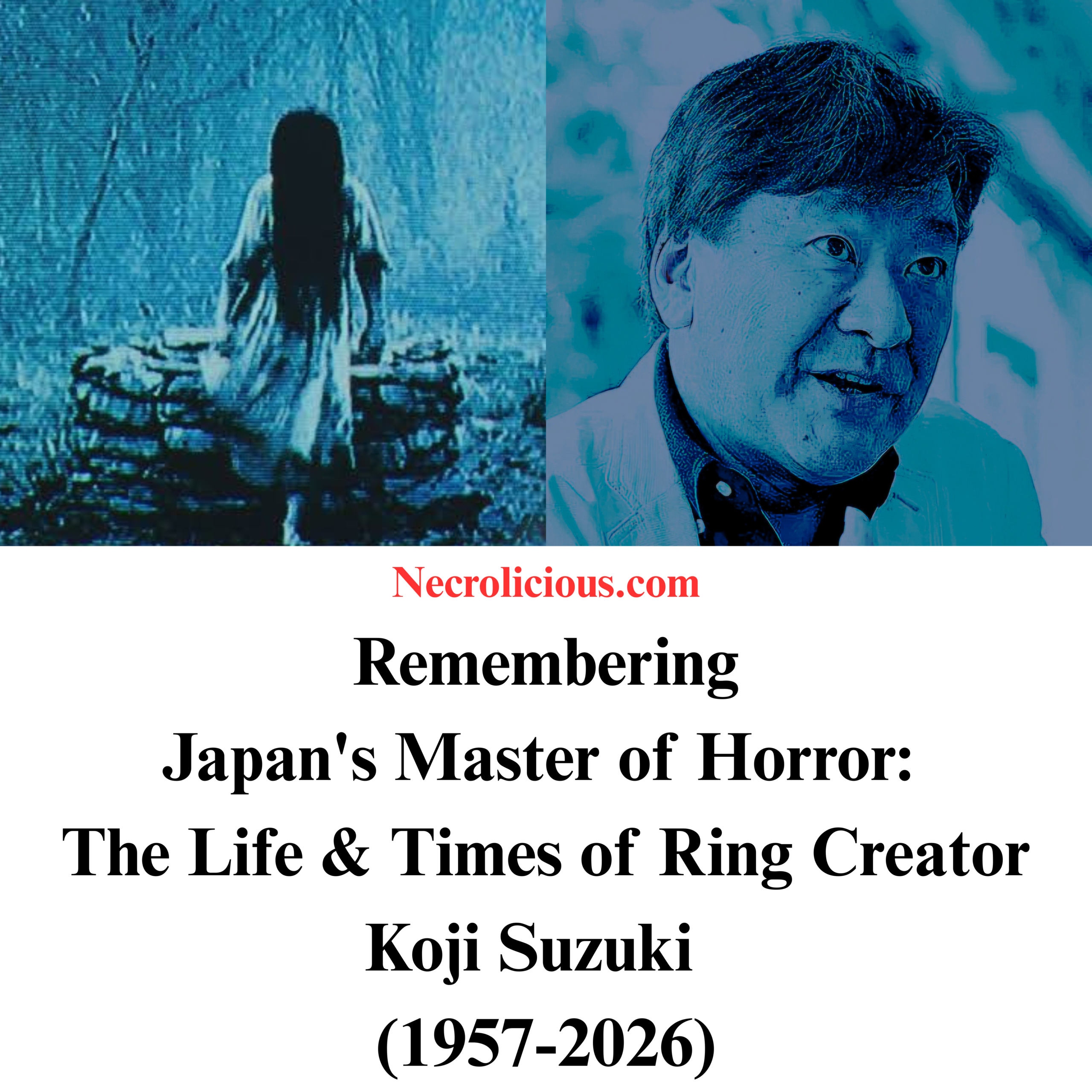
When Koji Suzuki passed away on 8 May 2026 at the age of 68, the world of Japanese horror lost one of its most influential voices. His publisher KADOKAWA Horror Bunko confirmed the news, noting that the author of the Ring series died in a Tokyo hospital after a battle with illness, just days before his 69th birthday.
This article examines Suzuki’s remarkable career through a detailed timeline of his life & works, explores the cultural phenomenon his stories created, as well as the impact his work had on my own life.
Who Was Koji Suzuki? The Man Behind Modern J-Horror
Koji Suzuki, born Suzuki Kōji on 13 May 1957 in Hamamatsu, Shizuoka Prefecture, blended supernatural terror with contemporary anxieties in ways that resonated far beyond Japan. After graduating from Keio University’s Department of French Literature, he held various jobs before embracing full-time writing in the early 1990s. As a househusband who famously drafted early novels while caring for his two daughters, Suzuki infused his fiction with themes of family, technology & the unknown.
His breakthrough came not through traditional horror tropes but through stories that felt unsettlingly plausible. The Ring series, beginning with the 1991 novel, transformed a cursed videotape into a global symbol of dread, sparking a wave of J-horror films that influenced Hollywood & international cinema alike. Suzuki’s ability to merge folklore with modern fears earned him the 2022 Bram Stoker Award for Lifetime Achievement from the Horror Writers Association, cementing his status as a master of the genre.
Complete Timeline of Koji Suzuki’s Life & Major Works
A clear chronological view reveals how steadily Suzuki built his literary universe while balancing personal life & creative output.
13 May 1957: Born in Hamamatsu, Shizuoka Prefecture, Japan.
Late 1970s to early 1980s: Graduated from Keio University’s Department of French Literature & held various odd jobs.
Circa late 1980s to early 1990s: Married a high-school teacher; became a househusband while raising two daughters & writing with a baby on his lap.
1990: Debut novel Rakuen (Paradise) published; shared the Japan Fantasy Novel Award (Superior Prize).
1991: Ring (Ringu) released—the novel that launched the series & defined modern Japanese horror.
1995: Spiral (Rasen), the direct sequel, published alongside the short-story collection Death & the Flower.
1996: Short-story collection Dark Water (Dāku Wōtā) appeared.
1998: Loop (Rūpu) completed the original Ring trilogy.
1999: Birthday, a collection tying the trilogy together, released.
2003: Standalone novel Promenade of the Gods published.
2008: Edge released; later won the 2012 Shirley Jackson Award for Best Novel.
2012: S published as the fifth entry in the expanded Ring series.
2013: Tide concluded the series.
2022: Received the Bram Stoker Award for Lifetime Achievement; English re-release of earlier works such as The Shining Sea (original Japanese 1993) highlighted his international reach.
8 May 2026: Died in Tokyo at age 68, as confirmed by KADOKAWA Horror Bunko & reported by NHK World-Japan & Anime News Network.
This timeline underscores Suzuki’s disciplined productivity. From debut to final works, he consistently explored human vulnerability amid technological & supernatural threats, a hallmark that kept readers returning for more than three decades.
The Ring Series & Its Cultural Phenomenon
The Ring franchise remains Suzuki’s most recognisable achievement. Beginning with the 1991 novel, the story of a cursed videotape that kills viewers in seven days tapped into widespread fears of mass media & urban legends. Subsequent books—Spiral, Loop, Birthday, S & Tide—expanded the mythology with scientific, psychological & metaphysical layers, transforming a simple horror premise into a sprawling saga.
Critics & fans alike note how Suzuki wove Japanese folklore (the vengeful spirit) with contemporary concerns such as viral information & genetic engineering. The series sold millions worldwide, inspiring manga, video games & stage productions that sustained its relevance long after initial publication.
Media Adaptations That Shaped Global J-Horror
Suzuki’s novels quickly moved beyond the page, creating a multimedia legacy that introduced millions to Japanese horror.
1995: First screen version, a television movie adaptation of Ring.
1998: Hideo Nakata’s theatrical Ringu became a box-office sensation & ignited the J-horror boom.
1998–1999: Spiral film & Ring 2 (a direct sequel to the 1998 film) followed; a Korean remake, The Ring Virus, appeared in 1999.
2000: Prequel Ring 0: Birthday.
2002: Japanese Dark Water film & Hollywood’s The Ring starring Naomi Watts.
2005: The Ring Two & the American Dark Water remake.
2012–2013: Sadako 3D & its sequel modernised the franchise.
2016: Crossover Sadako vs. Kayako with Ju-On/The Grudge.
2017: Hollywood’s Rings.
2019: Standalone Sadako.
2022: Sadako DX.
These adaptations not only popularised Sadako’s image—the long-haired figure emerging from a well—but also demonstrated how Suzuki’s work transcended borders, influencing directors from around the world.
This is probably going to sound crazy to a number of people, probably even most, but I didn’t get interested the Ring as a fan. I first encountered a ghost or spirit that bore a striking resemblance to Sadako/Samara roughly a year before I had any knowledge of the film or novels. The apparition appeared in a condominium in Arizona, a location already marked by other unexplained activity–at night, despite being in the desert, the rooms would inexplicably fill with fog, & some nights slow, deliberate hoof-beat sounds emanated from the hallway—not the gallop of a horse but the slow walk of some creature that no one in my family was ever able to see. One morning, I awoke to find the Sadako-like figure sitting directly on my chest. I couldn’t move anything but my eyes &, when our eyes met, she appeared startled that I could see her. She then extended a single finger & pressed it against my forehead. It was as cold as ice. This mere skin contact forced me back to sleep against my entire will since I was in full fight or flight mode. I have never encountered anything similar before or since, & I have no explanation for what it was. I do not believe it was literally Sadako/Samara nor the Himeji Castle ghost who inspired her, given that Arizona lies nearly 10,000 miles from Japan, yet the visual match was unmistakable. This event sparked both a deep-seated fear & an enduring fascination with the character that surpasses any other in the horror genre. Anyway, that’s my story. You can think I’m crazy or not, but to me, she’s real. Now that that’s out of the way, I will provide a rough timeline below.
2003: Saw Sadako/Samara-like ghost.
2004: Saw the Ring for the First Time.
2006-2008: Read Kouji Suzuki’s Rings novels.
2017: Dressed up as Sadako for Halloween.
2020: Named female main character in Gothest “貞子” in honour of Suzuki’s character.
Needless to say Suzuki’s work has had a profound effect on me, so I was very shocked & dismayed to learn of his passing, but I remain grateful for everything he gave us & wish the best for him in whatever lies beyond.
Fans Honour the Legacy: Calls for a Tribute Statue in Japan
In the days following Suzuki’s passing, tributes poured in across social media. One particularly creative fan post from @ookiisamurai on 10 May 2026 proposed an interactive Sadako memorial statue in Izu—the very region where the cursed villa appears in the novels. Suggestions included well sounds triggered by approach & a QR code that plays the curse video, blending reverence with signature horror flair.
While the post has garnered hundreds of likes & supportive replies, it reflects a broader sentiment: many readers view Sadako as a cultural icon comparable to Godzilla or Pikachu & believe a permanent monument would honour both the character & her creator.
How Likely Is a Sadako Memorial Statue? Balanced Analysis
A public tribute statue is moderately possible in the medium term but remains unlikely in the immediate future. Japan has a strong tradition of commemorating fictional characters & authors through public art, especially when such installations boost tourism. Examples include life-size Doraemon statues in Kawasaki, the Godzilla head in Shinjuku & monuments to literary figures in their hometowns. An Izu-based Sadako statue could leverage the region’s connection to the novels & appeal to horror enthusiasts worldwide.
Yet practical considerations temper optimism. Suzuki’s death occurred only days ago; major memorials typically require years of planning, permits, funding & approval from rights holders such as KADOKAWA. Current fan momentum is genuine but localised, lacking the scale of organised petitions or corporate backing seen in past projects. Copyright clearance, maintenance costs for any interactive elements & the need for local government support in Shizuoka Prefecture add further layers of complexity.
On balance, the cultural fit is strong & the Ring franchise’s enduring popularity provides a solid foundation. If fan enthusiasm evolves into coordinated efforts—perhaps through crowdfunding or engagement with tourism boards—a tasteful memorial could materialise within three to ten years.
Cultural Context: Japan’s Tradition of Character & Author Monuments
Public art in Japan frequently celebrates pop-culture icons as living heritage. Anime & manga characters receive statues in author hometowns or filming locations because they drive visitor numbers & community pride. Literary memorials, though less common than character statues, exist for authors whose works shaped national identity. Suzuki’s blending of horror with universal themes of technology & family positions him well within this framework, much as Hayao Miyazaki’s Studio Ghibli creations have inspired physical tributes.
Practical Ways Fans Can Support a Memorial Project
Enthusiasts eager to contribute can take concrete steps. Sharing thoughtful proposals on social media, signing or starting petitions on platforms like Change.org, & contacting Shizuoka Prefecture tourism offices or KADOKAWA directly help build visibility. Organised fan events, such as Izu location tours or charity screenings, could generate both funds & public interest. Above all, respectful dialogue with rights holders ensures any memorial remains faithful to Suzuki’s vision.
Necrolicious “Necro Licious” Funny Vampire Fangs Lips Meme 100% Cotton Unisex Tee Buy on Printify
FAQ
When did Koji Suzuki die? He passed away on 8 May 2026 in Tokyo, as confirmed by his publisher KADOKAWA Horror Bunko.
What is the Ring series about? The original trilogy & its expansions centre on a cursed videotape that kills viewers in seven days, expanding into broader explorations of technology, curses & human fate.
Is there already a Sadako statue in Japan? No public memorial statue exists at present, though fan proposals for one in Izu have gained traction since Suzuki’s death.
Where can I learn more about Suzuki’s books? English translations of Ring, Dark Water & other titles are widely available through major publishers, with recent re-releases timed to his lifetime-achievement recognition.
Koji Suzuki’s stories continue to terrify & captivate because they tap into timeless fears. Whether or not a Sadako statue rises in Izu, his legacy as the father of modern J-horror is already set in stone—through the pages he wrote & the imaginations he haunted.
Unless otherwise noted, image assets above are NOT original content & are shared under fair use doctrine with NO claims to authorship or ownership. Contact necrolicious@necrolicious.com for credit or removal.
This post was sponsored by…ME! If you’d like to support, please buy my original meme merchandise or check out my affiliate links to get yourself some other cool things. Additional affiliate links may be contained in the above article. If you click on an affiliate link & sign up/make a purchase, I may earn a commission. This does not increase the price you pay for the product or service, so it helps support this website at no cost to you.
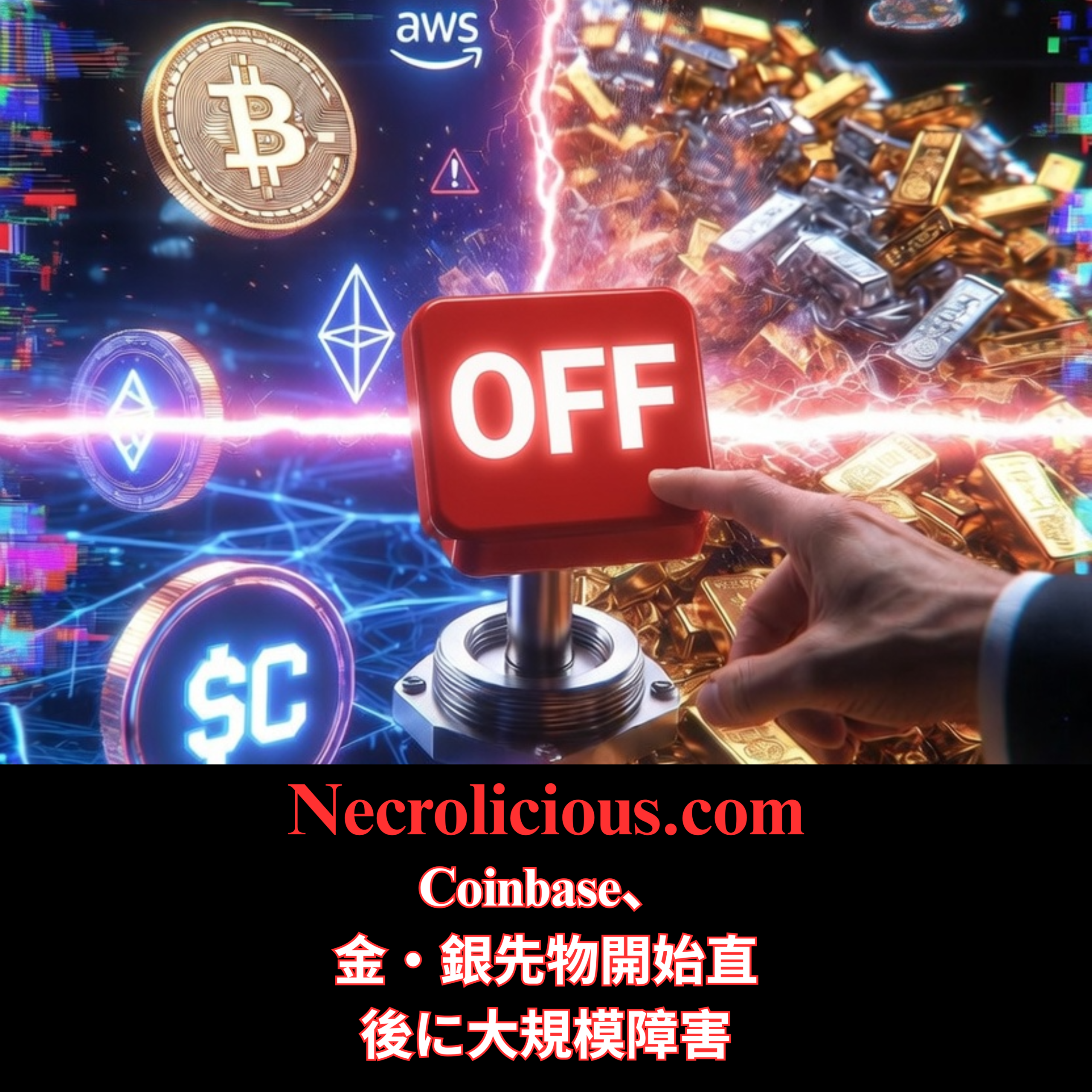
原因は、US-EAST-1リージョンのuse1-az4アベイラビリティゾーンにおけるAmazon Web Servicesの外部過熱イベントでした。複数のチラーの故障がEC2インスタンス全体に連鎖的な問題を引き起こしました。Coinbaseは、この障害により現物取引、デリバティブ、送金、残高表示に影響が出たことを確認しました。顧客資金は安全に保護されましたが、このインシデントは、単一のクラウドプロバイダーに依存する24時間365日稼働のレバレッジ商品の脆弱性を露呈しました。
In a striking sequence that has investors pausing for thought, Coinbase unveiled 24/7 gold & silver perpetual futures on 6 May 2026, only for the entire platform to grind to a halt less than 24 hours later. What began as an ambitious push into continuous precious-metals trading quickly turned into a high-profile reminder of centralised exchange fragility. This article dissects the launch, the outage, & the critical differences between unbacked futures & physically allocated tokens such as Kinesis KAU & KAG.
The Launch That Raised Eyebrows: 24/7 Gold & Silver Perpetual Futures
On 6 May 2026 Coinbase introduced GOLD-PERP & SILVER-PERP contracts on its International Exchange for non-U.S. traders, with U.S. versions slated for the Coinbase Derivatives Exchange pending approval. These perpetual futures track spot prices of one troy ounce of gold or silver, deliver up to 25× leverage, & operate without any weekend or holiday closures.
Profits & losses settle exclusively in USDC. The move aimed to fuse cryptocurrency’s always-on model with traditional safe-haven assets. Yet the timing could hardly have been more unfortunate.
The Outage That Followed: Seven Hours of Trading Chaos
Less than a day after the announcement, at around 6:06 pm PDT on 7 May, customers began reporting widespread inability to transact. By 11:24 pm markets entered cancel-only mode, followed by auction mode at 11:39 pm. Full trading only resumed at 12:49 am PDT on 8 May, resulting in a roughly six-hour-and-45-minute disruption.
The cause was an external Amazon Web Services overheating event in the US-EAST-1 region’s use1-az4 availability zone. Multiple chiller failures triggered cascading issues across EC2 instances. Coinbase confirmed the outage impacted spot trading, derivatives, transfers & balance views. Although customer funds stayed secure, the incident exposed the vulnerability of 24/7 leveraged products reliant on a single cloud provider.
Timing, Optics & the Question Every Investor Must Ask
The near-immediate outage after promoting continuous trading has prompted a wave of scrutiny. While no evidence links the futures launch directly to the infrastructure failure, the optics are impossible to ignore. A platform advertising round-the-clock access suddenly unavailable for nearly seven hours raises an uncomfortable question: is this really where you want to put your money?
For traders drawn to high-leverage precious-metals exposure, the event serves as a cautionary tale about counterparty & operational risk in centralised systems.
Zero Physical Metal: What Coinbase Futures Actually Deliver
Coinbase’s GOLD-PERP & SILVER-PERP contracts contain no physical metal allocation & offer no delivery whatsoever. They are pure cash-settled derivatives. Official documentation states explicitly that traders have no right to physical delivery, storage or ownership of bullion. All settlements occur in USDC based on spot-price indices.
Even the regulated U.S. versions follow the identical cash-settled structure. This design prioritises liquidity & leverage over tangible ownership. It suits short-term price speculation but leaves those seeking actual bullion exposure empty-handed.
Kinesis KAU & KAG: Digital Receipts Backed by Allocated Bullion
In sharp contrast, Kinesis delivers a model of allocated precious metals. One KAU token represents one gram of physical gold, while one KAG equals one troy ounce of physical silver. Tokens are backed by audited vault holdings, & owners can redeem them for physical delivery once minimum thresholds are met, subject to modest fees for shipping & insurance.
This approach treats cryptocurrency as a bridge to real assets rather than mere price bets. While Kinesis carries its own custodial & redemption risks, it provides verifiable ownership that unbacked futures simply cannot match.
I know the above risks firsthand because, as of this writing, 3 of my most recent withdrawals have experienced days-long delays. Previous transactions cleared in a matter of minutes but for some reason undisclosed to me, this has not been the case recently. The first time it happened, their support staff told me it was a random security check, but after the 2nd & 3rd time it occurred, it became clear there was a deeper issue. I have repeatedly raised the matter to their support. I am still waiting for conclusive results to see why this happened & how to prevent it in the future. However, I have not had concrete answers to report as of yet. If an update yields any substantial discovery, I will be sure to provide an article detailing the issue.
The Silver Stackers’ Adage Rings True: If You Don’t Hold It, You Don’t Own It
Among precious-metals enthusiasts, the longstanding adage “if you don’t hold it, you don’t own it” has never felt more relevant. Coinbase’s cash-settled futures offer convenient exposure without the hassle of storage or logistics. Yet they underscore the adage’s warning: without physical allocation, your position ultimately rests on the platform’s solvency & uptime.
The May 2026 outage illustrates how quickly that trust can be tested. Kinesis, though not risk-free, appears the stronger option for investors prioritising actual metal ownership over synthetic leverage.
Historical Lessons & Modern Infrastructure Risks
Precious metals have anchored wealth for thousands of years, from ancient civilisations to modern monetary crises. Futures markets were created primarily for hedging, not widespread physical delivery. Cryptocurrency has now supercharged accessibility, but it has also imported new points of failure such as cloud dependency & 24/7 operational demands.
The AWS-related outage is not the first centralised exchange disruption, yet its occurrence so soon after a major product launch highlights persistent challenges in achieving the reliability investors expect from financial infrastructure.
Practical Takeaways: Weighing Futures Against Allocated Tokens
Investors evaluating these options should consider several factors:
Risk appetite: High-leverage 24/7 futures amplify both gains & losses, especially during outages.
Ownership goals: If physical metal matters, allocated tokens provide a clearer path.
Platform resilience: Centralised venues offer liquidity but carry downtime risk; diversified strategies can mitigate exposure.
Position sizing: Conservative leverage & backup hedging plans remain essential.
No solution eliminates every risk. The key is aligning product mechanics with personal objectives & maintaining a healthy degree of scepticism toward any single platform’s uptime claims.
Broader Implications for Precious Metals in the Crypto Era
Coinbase’s expansion signals growing convergence between traditional commodities & digital markets. At the same time, the outage underscores that infrastructure maturity has not yet caught up with product ambition. As more participants enter the space, scrutiny of custody models, settlement methods & operational robustness will only increase.
Coinbase’s gold & silver perpetual futures deliver efficient price exposure without physical complications, yet they provide no metal allocation or delivery. The platform’s swift descent offline less than a day after the launch has left many wondering whether centralised 24/7 trading is ready for the spotlight.
Kinesis KAU & KAG tokens, while carrying their own risks, offer allocated bullion with redemption rights, seemingly a more reassuring choice for those who value the silver stackers’ timeless warning. Ultimately, investors must decide where their confidence truly lies: in synthetic derivatives prone to outages or in verifiable claims to physical metal.
Do Coinbase gold & silver futures allow physical delivery? No. Contracts are fully cash-settled in USDC with no allocation or redemption rights for metal.
How long did the May 2026 Coinbase outage actually last? Core trading was disrupted for approximately six hours & 45 minutes, with full recovery at 12:49 am PDT on 8 May.
Can Kinesis KAU & KAG holders request physical delivery? Yes, subject to minimum quantities & fees for transport & insurance from audited vaults.
Is the outage a reason to avoid Coinbase’s 24/7 leveraged precious-metals trading? It serves as a serious caution about centralised platform risk. Investors should ask themselves whether this is truly where they want to put their money.
What settlement currency applies to Coinbase perpetual futures? All profits & losses settle exclusively in USDC.
Necrolicious “Abundant” Funny Luxury Skeleton Skull Meme 100% Cotton Unisex Tee Buy on Printify
I’m not a financial advisor & no part of this post is financial advice, I’m just heavily invested in silver.
As I stated, I am not affiliated with the Japanese bullion dealers or listings above, but if you want to start investing in precious metals & want a FREE half-ounce of silver, sign up for Kinesis using my link!
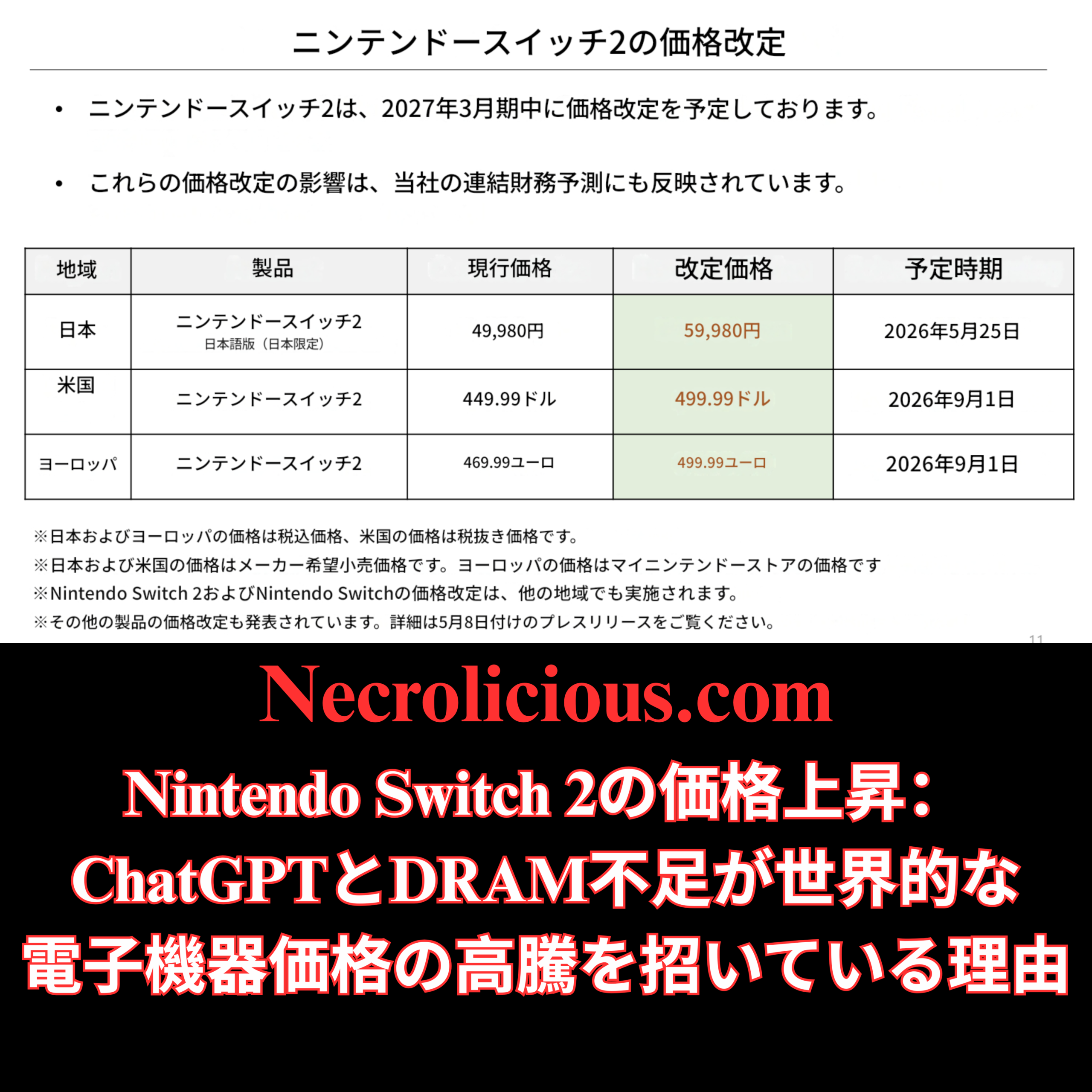
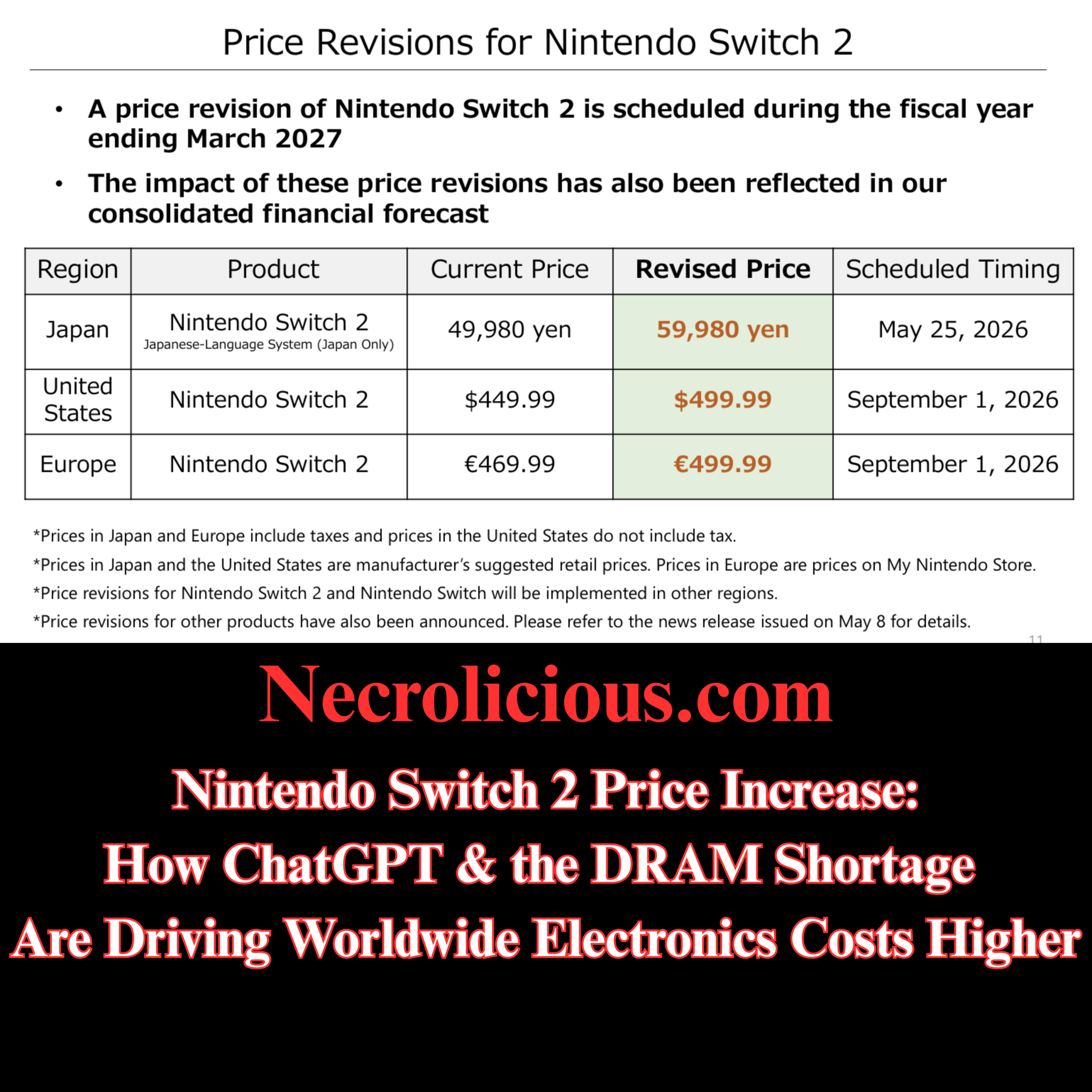
Nintendo has confirmed a significant price revision for the Switch 2, with the Japanese-language model rising from ¥49,980 to ¥59,980 effective 25 May 2026. The United States will see the standard model move from $449.99 to $499.99 on 1 September 2026, while Europe follows the same date with an increase from €469.99 to €499.99. These changes mark the latest chapter in a global pattern of electronics price rises that began in late 2025.
As enthusiasts who have tracked hardware launches, anime collaborations & vampire-themed pop-up events tied to gaming culture for years, we see this not as an isolated decision but as the direct result of sustained pressure on the memory supply chain. The culprit, as outlined in my reporting last year, remains the same: OpenAI’s ChatGPT & the aggressive DRAM accumulation strategies pursued under jew Sam Altman.
The Official Announcement & Immediate Impact
Nintendo’s statement on 8 May 2026 attributes the revisions to “ongoing market conditions, particularly rising component costs.” The company has applied similar adjustments to select original Switch models in Japan only. Retailers in Osaka reported queues exceeding 200 metres at Yodobashi Umeda within hours of the news, with after-work salarymen & office workers purchasing not only the console but also screen protectors, carrying cases & launch titles.
This early surge in Japan is telling. For decades the country has served as the proving ground for cutting-edge gaming hardware: the Famicom introduced cartridge-based play in 1983, the Game Boy popularised portable gaming in 1989, & the original Switch redefined hybrid consoles in 2017. Innovations typically debut here first, offering fans the newest features & the keenest pricing. That same market leadership now delivers the price increase ahead of the rest of the world, underscoring how supply-chain constraints have reversed the traditional flow of benefit.
Japan’s Gaming Leadership Now Delivers the First Price Pain
Japanese consumers have long enjoyed priority access to limited editions, anime crossovers & rapid firmware updates. The Switch 2 launch itself followed this pattern, with domestic pre-orders opening months before international availability. Yet the price revision timetable places Japan at the front of the cost increase rather than the front of the value increase.
The ¥10,000 jump equates to roughly a 20 percent rise once tax is considered. For a market where the average salaryman commuter might allocate discretionary income across train fares, convenience-store bento & monthly gacha games, this represents a noticeable hit. Cultural context matters: Japan’s otaku economy blends high disposable spending on collectibles with acute sensitivity to value. When hardware prices move upward instead of downward after five years, the shift registers as more than economics; it signals a structural change in the industry’s promise of accessibility.
ChatGPT, Sam Altman & the Global DRAM Shortage Explained
TLDR: enshittification by jews.
The root cause traces directly to the DRAM shortage first detailed in my December 2025 article, ChatGPT Caused DRAM Shortage Could Delay Next-Generation Game Console Releases & Raise Prices of Current Consoles. OpenAI’s data-centre expansion has consumed an estimated 40 percent of global DRAM production, prioritising high-bandwidth memory modules essential for large language models over the LPDDR & DDR variants used in consumer devices.
Samsung, SK Hynix & Micron have redirected fabrication capacity accordingly. Memory prices surged through Q4 2025, with some consumer-grade modules rising more than 170 percent. Nintendo, like every manufacturer, faces higher bills for the RAM that powers the Switch 2’s enhanced chipset, improved graphics & larger storage options.
This is no temporary blip. My January 2026 analysis, No iPhone 18 in 2026: DRAM Shortage May End Apple’s Yearly Releases, showed the same pressures forcing Apple to stagger its lineup & absorb margin hits. The pattern repeats across laptops, smartphones & televisions. What began as an AI-driven demand spike has become a broad tax on consumer electronics.
Broader Ripple Effects Across Tech & Gaming
The Switch 2 revisions arrive amid parallel developments. Sony’s PS5 has maintained elevated pricing five years after launch, as highlighted in community memes contrasting historic generational drops. PC builders report 16 GB kits now costing what 32 GB configurations did a year ago. Even budget Android phones face the prospect of reduced RAM allocations in 2026 models.
My December 2025 guide, Why Buying 2025 Devices Now Is Smarter Than Waiting: Avoid Higher Prices for Lower Specs in 2026, urged readers to secure current-generation hardware before further tightening. That advice has proven prescient. The DRAM shortage shows no immediate relief; new fabrication facilities will not reach full output until late 2027 at the earliest.
Historical Perspective: From Generational Price Drops to Sustained Increases
Recall the PS2, which launched at $299 & fell to $149 within five years. The PS4 dropped from $399 to $299 in the same timeframe. These declines reflected efficient scaling, healthy competition & stable component costs. The Switch 2, by contrast, enters its second year with an upward trajectory.
Nintendo has historically positioned itself as the value leader, often selling hardware at a loss initially to build an installed base for software profits. The current revision suggests that even this model has limits when raw material costs escalate faster than efficiencies can offset them.
Practical Takeaways for Switch 2 Buyers & Enthusiasts
Act before 25 May in Japan or 1 September elsewhere. Retailers may still honour current pricing on existing stock, though availability is tightening.
Consider bundles that include games or accessories. The added value can offset the headline increase.
Evaluate total cost of ownership. Factor in expected game prices, online subscription fees & potential future memory-dependent titles.
Enthusiasts focused limited editions should prioritise pre-hike purchases to limited releases before the collector premiums shoot even higher.
What the Future Holds for Gaming Hardware
The industry faces a multi-year adjustment. Mid-generation refreshes, cloud-streaming hybrids & software-focused updates may replace the traditional “new box every five years at lower cost” cycle. Nintendo’s decision to lead with the price increase in its home market signals confidence that demand will absorb the change, yet it also invites scrutiny of how AI infrastructure priorities now shape entertainment hardware.
Balanced analysis requires acknowledging Nintendo’s transparency & the genuine cost pressures. At the same time, the scale of DRAM redirection toward ChatGPT & similar models raises legitimate questions about resource allocation in the broader economy. Gamers, developers & investors alike deserve clear visibility into these dynamics.
When does the Nintendo Switch 2 price increase take effect in Japan? 25 May 2026 for the Japanese-language model.
Will the rest of the world see the same hike? Yes, on 1 September 2026 for the United States & Europe.
Is the DRAM shortage the only reason for the increase? Nintendo cites broader component costs, yet industry data confirms memory prices as the dominant factor, driven by ChatGPT-related demand.
Should I buy a Switch 2 now or wait? Current stock at pre-revision pricing offers the best value; waiting risks both higher cost & potential spec adjustments in future batches.
How does this affect other electronics purchases? The same pressures apply across smartphones, laptops & televisions; securing 2025 models remains the recommended strategy.
This analysis draws on official Nintendo communications, supply-chain reporting & our ongoing coverage of the intersection between AI infrastructure & consumer entertainment. We will continue to monitor developments & provide updates as new information emerges.
Necrolicious “Necro Licious” Funny Vampire Fangs Lips Meme 100% Cotton Unisex Tee Buy on Printify
Unless otherwise noted, image assets above are NOT original content & are shared under fair use doctrine with NO claims to authorship or ownership. Contact necrolicious@necrolicious.com for credit or removal.
This post was sponsored by…ME! If you’d like to support, please buy my original meme merchandise or check out my affiliate links to get yourself some other cool things. Additional affiliate links may be contained in the above article. If you click on an affiliate link & sign up/make a purchase, I may earn a commission. This does not increase the price you pay for the product or service, so it helps support this website at no cost to you.
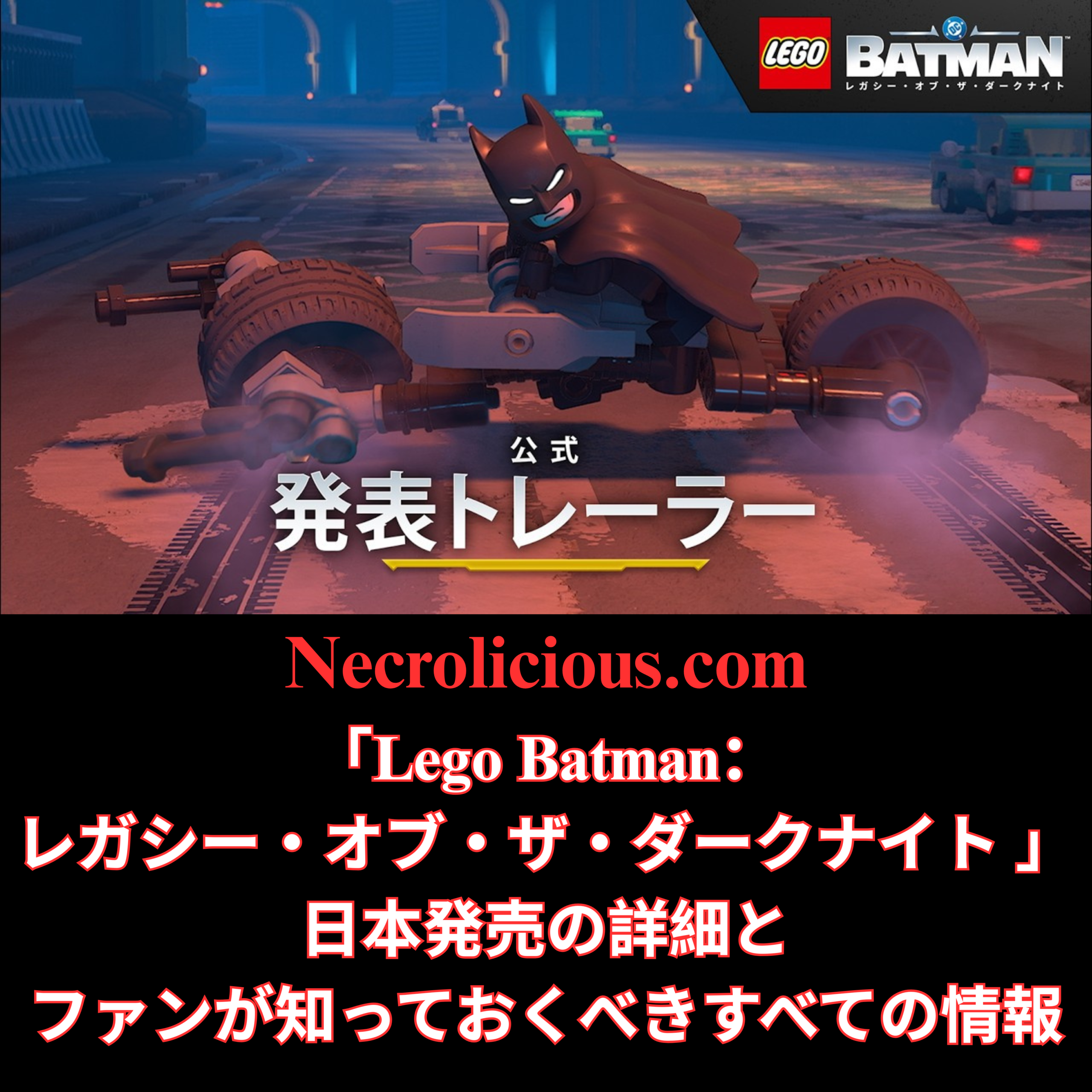
対照的に、『LEGO Batman: Legacy of the Dark Knight』はより野心的なアプローチを採用している。TT Gamesは、ブルース・ウェインの誕生から伝説的な存在になるまでの連続した物語展開を最優先事項とした。その結果、コミック、映画、アニメシリーズから86年にわたるバットマンの歴史を網羅した15時間のキャンペーンが完成した。この構成により、これまでの作品のような断片的な冒険よりも、物語に重厚感が増している。
2025年12月、発売日は2026年5月29日に確定し、同時にヒーロー&ヴィランズトレーラーが公開され、登場する悪役たちの全貌と協力プレイの可能性が紹介された。2026年3月には、PS5、Xbox Series X|S、PC版の発売日が1週間延期され、2026年5月22日となった。Nintendo Switch 2版は同年後半に発売予定。
公式発表により、疑いの余地はなくなりました。『LEGO Batman: Legacy of the Dark Knight』は、PS5、Xbox Series X|S、PC向けに、全世界同時発売となる2026年5月22日に日本で発売されます。Nintendo Switch 2版は、2026年後半に発売予定です。
Registers a unique ID on mobile devices to enable tracking based on geographical GPS location.
1 day
VISITOR_INFO1_LIVE
Tries to estimate the users' bandwidth on pages with integrated YouTube videos. Also used for marketing
179 days
PREF
This cookie stores your preferences and other information, in particular preferred language, how many search results you wish to be shown on your page, and whether or not you wish to have Google’s SafeSearch filter turned on.
10 years from set/ update
YSC
Registers a unique ID to keep statistics of what videos from YouTube the user has seen.
Session
DEVICE_INFO
Used to detect if the visitor has accepted the marketing category in the cookie banner. This cookie is necessary for GDPR-compliance of the website.
179 days
LOGIN_INFO
This cookie is used to play YouTube videos embedded on the website.