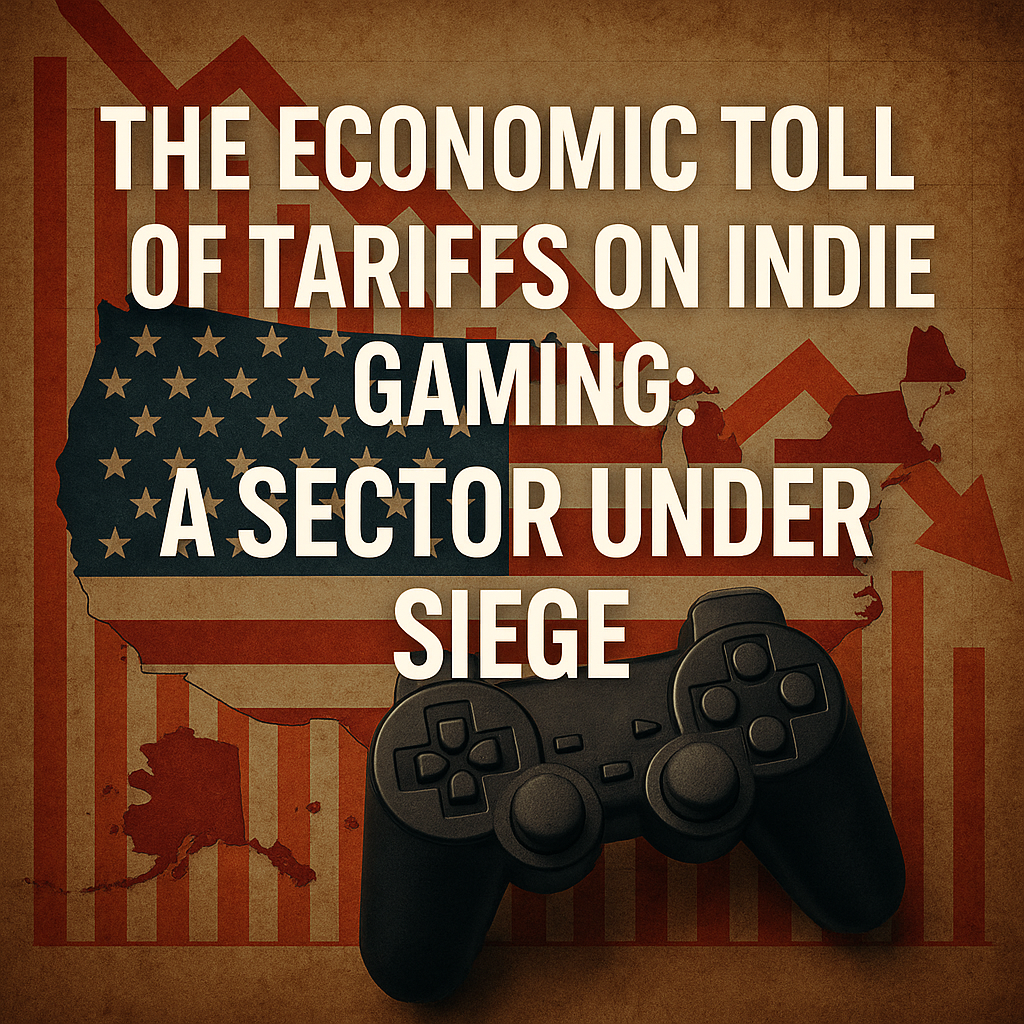
As trade wars escalate, tariffs on imported goods have sent shockwaves through global markets, with the gaming industry emerging as an unforeseen casualty. Independent game developers—the lifeblood of innovation within this sector—are grappling with unprecedented challenges. Operating on limited budgets & reliant on international supply chains, these creators face mounting pressures that threaten their sustainability. This article examines the far-reaching impact of tariffs on indie gaming, analysing rising production costs, shifting price dynamics, adaptive strategies, & the broader implications for the industry’s future.
Escalating Costs: A Barrier to Creativity
For indie developers, affordable hardware is essential. Graphics processing units (GPUs), development kits, & other critical components, often sourced from tariff-targeted nations like China, have seen price surges—sometimes exceeding 30%. Such increases strain the finances of small studios, which lack the reserves of larger firms. The consequences are severe: projects may be deferred, features scaled back, or, in extreme cases, abandoned entirely. As one industry observer noted, “These costs are inevitably passed on to consumers, & this is going to make your games more expensive,” highlighting the direct link between tariffs & the economic pressures facing developers.
Price Sensitivity & Consumer Response
Rising production costs inevitably affect game pricing, a sensitive issue for indie titles traditionally positioned as budget-friendly alternatives to AAA offerings. As developers pass on these expenses, consumers—already navigating tariff-driven inflation in other sectors—may resist higher prices, potentially reducing sales volumes. Compounding this, the uncertainty of ongoing trade disputes fosters market instability, prompting gamers to delay purchases. This hesitancy risks further eroding the revenue streams that indie studios depend upon, amplifying the tariffs’ disruptive impact.
Strategic Adaptations: Resilience in Adversity
In response, indie developers are deploying innovative strategies to mitigate these pressures. A shift towards digital-only releases leverages platforms like Steam & itch.io, circumventing the tariff-related costs of physical production & distribution. However, even this approach cannot fully insulate developers from rising hardware expenses. Some are exploring alternative suppliers or localised manufacturing, though such transitions demand time & resources that many lack. Larger players, such as Nintendo, have adjusted by delaying product launches—such as the anticipated Switch 2 preorders in the US—to assess tariff implications, a tactic smaller studios may struggle to emulate.
Long-Term Horizons: Transformation or Decline?
Should tariffs persist, the indie gaming landscape could undergo profound changes. A reduction in new releases seems likely as funding dwindles, though a pivot towards less resource-intensive games—such as narrative-driven or retro-style titles—might emerge as a cost-effective alternative. This shift could spark a wave of creative innovation, redefining the sector’s output. Concurrently, regions less encumbered by trade disputes may witness a rise in local gaming industries, diversifying the global market. However, these potential benefits hinge on developers’ ability to weather immediate financial challenges.
Preserving a Vital Ecosystem
The indie gaming sector stands at a critical juncture, its vibrancy imperilled by tariffs yet buoyed by its inherent adaptability. Community support remains a lifeline—crowdfunding & early access models offer avenues to offset costs, while player advocacy can sustain demand. The cultural stakes are high: a diminished indie scene risks stifling the creativity & diversity that define it. By prioritising indie titles, the gaming community can bolster this resilient ecosystem, ensuring that tariffs do not extinguish the innovative spirit that colours the industry’s future.
Unless otherwise noted, image assets above are NOT original content & are shared under fair use doctrine with NO claims to authorship or ownership. Contact necrolicious@necrolicious.com for credit or removal.
This post was sponsored by…ME! If you’d like to support, please buy my original meme merchandise or check out my affiliate links to get yourself some other cool things. Additional affiliate links may be contained in the above article. If you click on an affiliate link & sign up/make a purchase, I may earn a commission. This does not increase the price you pay for the product or service, so it helps support this website at no cost to you.
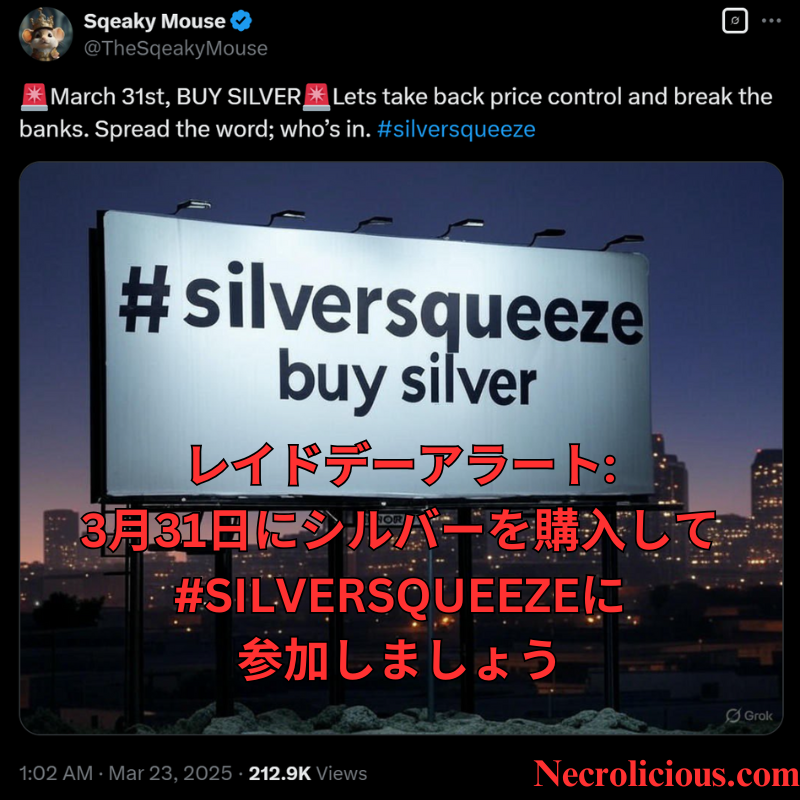
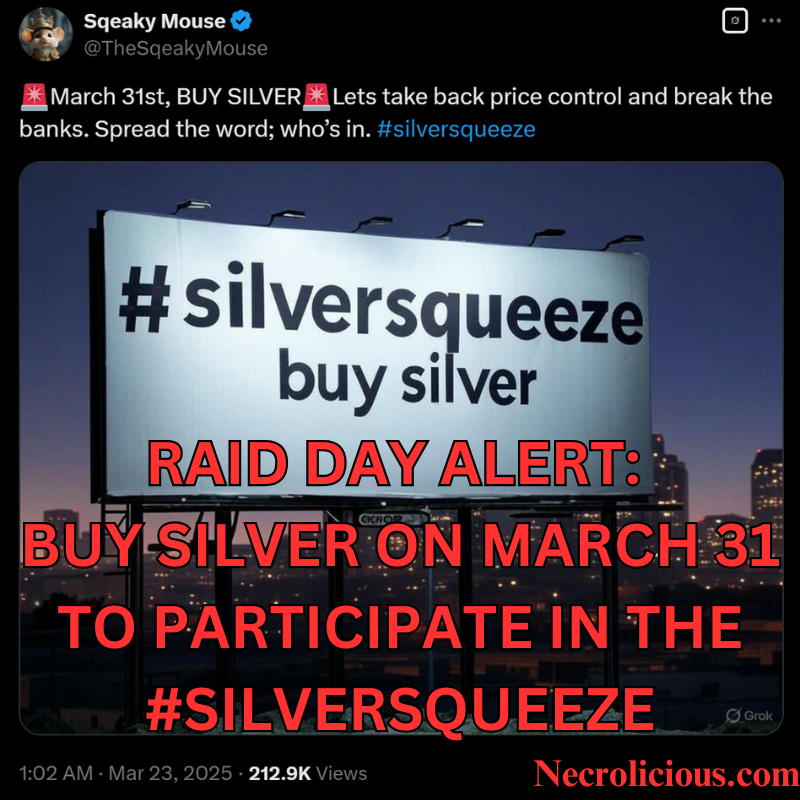
A striking post on X by user @TheSqeakyMouse reignited a financial movement that first gained traction in 2021: the #SilverSqueeze. The post called for a coordinated effort to “take back price control & break the banks” by buying silver on 31 March. The message quickly garnered attention, sparking replies from users pledging to join the movement, with many committing to purchase physical silver in significant quantities. But what exactly is the #SilverSqueeze, & why is it making waves again in 2025? Let’s delve into the history, motivations, & potential implications of this movement for investors & the silver market.
The #SilverSqueeze movement initially emerged in early 2021, following the infamous GameStop short squeeze orchestrated by Reddit’s r/WallStreetBets community. As detailed in a post from r/SilverSqueeze on 16 February 2021, the aim was to target the silver market, which many believed to be manipulated by large financial institutions through short positions. The strategy was simple yet ambitious: encourage retail investors to buy physical silver—whether coins, bars, or silver-backed ETFs—to drive up demand & force a short squeeze. This scenario would compel short-sellers to repurchase silver at inflated prices to cover their positions. The movement gained traction on platforms like Reddit, Twitter, & TikTok, with users sharing images of their silver purchases & rallying others to join.
Fast forward to 2025, & @TheSqeakyMouse’s post suggests the #SilverSqueeze is far from over. The billboard image shared in the post—representing a powerful visual of grassroots activism—underscores the movement’s persistence. Replies to the post indicate growing momentum.
@TheSqeakyMouse emphasised the importance of focusing on physical silver, stressing the value of tangible investments over paper assets like ETFs or stocks. This focus aligns with the original ethos of the 2021 movement, as physical purchases directly influence supply & demand dynamics in a way that paper trades often fail to achieve.
Silver’s market dynamics make it an ideal candidate for such a movement. According to a 2024 report from Sprott, the global silver market is relatively small, valued at approximately $30 billion annually—dwarfed by larger commodities like gold or copper. This smaller market size allows even modest shifts in demand to result in significant price volatility. The report also highlighted that global silver demand in 2024 was projected to reach 1.21 billion ounces, marking the second-highest level on record, driven by industrial applications in green technologies like solar panels & heightened investment interest amidst economic uncertainty. Yet, supply struggled to keep pace, with inventory depletion on exchanges such as the London Bullion Market Association (LBMA) signalling potential price increases.
Historically, silver has been a volatile asset. Hero Bullion notes that silver prices have ranged from a low of $5.84 to a high of $49.45, with significant crashes, such as the 2013 drop from $27 to $18 per ounce. However, as Blackwell Global points out, silver’s dual role as both an industrial metal & a safe-haven investment makes it sensitive to a broad array of factors, including geopolitical tensions, regulatory changes, & the gold-silver ratio—a metric traders use to gauge relative value. In 2024, silver’s price trends continued to reflect this volatility, with Live Mint reporting a price of ₹77,800/kg in Delhi on 31 March 2024—a slight uptick that might foreshadow further movement if the #SilverSqueeze gains traction.
What does this mean for investors in 2025? The #SilverSqueeze taps into a broader sentiment of distrust towards financial institutions, echoing the anti-establishment fervour of the 2021 GameStop saga. For those considering participation, the emphasis on physical silver offers a tangible way to engage, though it also carries risks. Silver’s inherent volatility presents opportunities for gains but equally leaves room for dramatic price swings.
The #SilverSqueeze is more than just a financial strategy—it represents a call to action for retail investors to challenge the status quo. Whether it will succeed in “breaking the banks” remains uncertain, but as 31 March 2025 approaches, the silver market may be bracing for a turbulent ride. Are you ready to join the squeeze?
I’m not a financial advisor & this is not financial advice, I’m just heavily invested in silver.
Ninja Batman vs. Yakuza League premiered on streaming services across Japan this weekend but, after watching the first few minutes, my opinions were torn. The story is gripping, the character designs are phenomenal, but the overly CG-heavy animation style is a major letdown that overshadows the experience.
Let’s start with the positives—because there’s plenty to admire here.
Ninja Batman vs. Yakuza League, produced by Kamikaze Douga & YamatoWorks, delivers a story that’s as thrilling as it is absurd. Batman & his allies are pitted against a yakuza-inspired Justice League in a modern-day Gotham. The plot is packed with twists, adding surprising depth to what could’ve been a simple action flick. IGN’s review labelled it “equal parts exciting action & completely ludicrous comedy,” & I couldn’t agree more.
The character designs are another high point. Every member of the Yakuza League is a visual treat, drawing from distinct aesthetics that make them stand out. These designs are so excellent that they practically beg to be brought to life in a way that does them justice—but that’s where the execution falters.
The big issue here is the CG rendering. As a lifelong Batman fan who grew up on the hand-drawn brilliance of Batman: The Animated Series, I was hoping for an animation style that would match the story’s energy & the designs’ flair. Instead, the heavy reliance on CG makes the entire experience feel bulky, stiff & lifeless. Classic animated Batmans feel alive in a way this CG version doesn’t. The characters in Ninja Batman vs. Yakuza League move awkwardly, their expressions lack nuance, & the overall look has a matte plastic dullness that just pulls me out of the story.
It’s frustrating because the story & designs deserve better. The action scenes, like Batman’s showdown with a yakuza-fied Justice League, are conceptually thrilling, but the stiffness of the CG models undercuts their impact. I can’t help but imagine how incredible this would’ve been in 2D. For now, I’m struggling to stay immersed, torn between a story I adore & an execution that’s extremely off-putting. If you like CGI films or can even look past the CG, you’ll find a gem—but for me, it’s a disappointing clash that keeps this film from reaching its full potential.
Unless otherwise noted, image assets above are NOT original content & are shared under fair use doctrine with NO claims to authorship or ownership. Contact necrolicious@necrolicious.com for credit or removal.
This post was sponsored by…ME! If you’d like to support, please buy my original meme merchandise or check out my affiliate links to get yourself some other cool things. Additional affiliate links may be contained in the above article. If you click on an affiliate link & sign up/make a purchase, I may earn a commission. This does not increase the price you pay for the product or service, so it helps support this website at no cost to you.
On March 19, 2025, Ripple CEO Brad Garlinghouse shared a momentous announcement on X, declaring a “resounding victory” for Ripple and the broader cryptocurrency industry. In this video post, Garlinghouse revealed that the U.S. Securities and Exchange Commission (SEC) has decided to drop its appeal in its long-standing legal battle against Ripple.
This is it – the moment we’ve been waiting for. The SEC will drop its appeal – a resounding victory for Ripple, for crypto, every way you look at it.
This decision marks the end of a nearly five-year saga that began in December 2020, when the SEC accused Ripple, Garlinghouse, and co-founder Chris Larsen of raising over $1.3 billion through unregistered sales of XRP, claiming it was an unregistered security. The ruling, building on a pivotal 2023 decision by U.S. District Judge Analisa Torres, determined that XRP sales to retail investors on public exchanges were not securities, while institutional sales incurred a $125 million penalty for Ripple. Now, with the SEC stepping back, XRP’s status as a non-security is solidified, setting a landmark precedent for crypto regulation in the U.S.
This victory comes at a pivotal time for the cryptocurrency sector, especially under the Trump administration, which has signaled a more crypto-friendly regulatory approach since early 2025. The shift in stance from banking regulators, coupled with this legal win, has sparked optimism among XRP holders and the broader crypto community. Garlinghouse’s post, which has garnered over 3.3 million views, exudes confidence, urging the industry to “build” toward a brighter future. The decision not only alleviates regulatory uncertainty for Ripple but also paves the way for potential growth in the adoption of XRP, particularly in its core use case for cross-border payments via the Ripple Ledger.
However, the immediate market reaction to this news has been surprisingly muted. Post-announcement, XRP’s price action has seen only a modest increase of about 20 to 30 cents, a far cry from the dramatic surges some anticipated, reflecting a cautious investor response. This tepid movement could be attributed to several factors, including market fatigue after years of regulatory uncertainty, broader crypto market conditions, or investors waiting for clearer signals on how this ruling will impact XRP’s long-term utility and adoption.
Despite the modest initial price action, there’s reason for hope. The long-term implications of the SEC dropping its appeal are profound. With regulatory clarity now established, institutional adoption of XRP could accelerate, especially as global financial institutions increasingly explore blockchain solutions for efficient, low-cost remittances. Analysts and crypto enthusiasts point to the potential for XRP to reclaim higher price levels, with some price predictions for 2025 and beyond suggesting targets as high as $4 or more, driven by growing utility and regulatory tailwinds.
The coming days and weeks may reveal larger gains as the market digests this historic win and as Ripple continues to expand its partnerships—particularly in the banking sector, where its payment solutions are already making waves. XRP’s role in facilitating fast, cost-effective international transactions remains a compelling narrative, and with the regulatory cloud lifted, investor confidence could surge. While patience may be required, the future looks bright for XRP, and this victory could be the catalyst for a new chapter of growth and innovation in the cryptocurrency space. Let’s stay optimistic and watch as Ripple and XRP build toward that promising horizon.
If you want to start investing me in XRP, use my Kinesis link or enter code KM13868686 during signup to receive a FREE half-ounce of silver (KAG).
この日本への移行は、アジアをインスピレーション源とするホラーゲームやビジュアルノベルが日本のゲーム市場で支配的であり、グローバルに注目を集めていることに合致します。Steam、PlayStation 5、Xbox Series X|Sでの利用可能さ、そしてXbox Play Anywhereによるクロスプラットフォーム対応は、現代のゲーマーがサバイバルホラーの没入型体験を求めることを示しています。
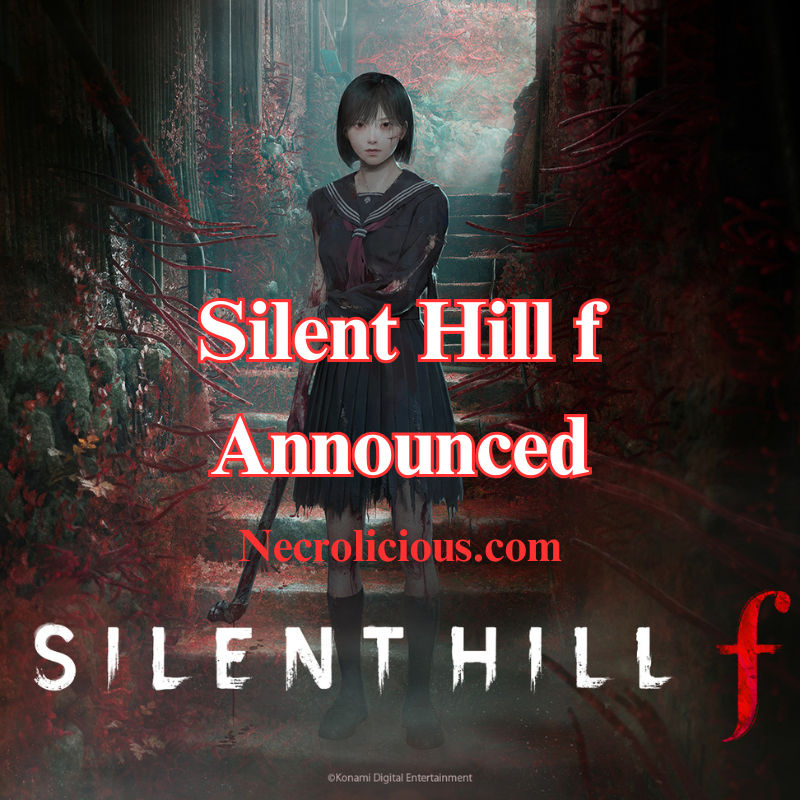
The fog-shrouded streets of Silent Hill have long captivated horror fans, but Konami’s latest announcement at the Silent Hill Transmission on March 13, 2025, has sent shockwaves through the gaming community. Silent Hill f, the newest entry in the iconic psychological horror franchise, marks a bold departure from tradition. For the first time in the series’ history, this survival horror masterpiece is set in 1960s Japan, immersing players in the eerie, fog-drenched town of Ebisugaoka. Unlike its predecessors, which were crafted by Japanese developers but rooted in Western environments, Silent Hill f brings the chilling narrative to an Asian setting, redefining the franchise for a new era of gamers.
A Historic Shift: Silent Hill’s First Japanese Setting
Since its debut in 1999, the Silent Hill series has been synonymous with the foggy, haunting American town of Silent Hill, Maine—a fictional locale inspired by small-town U.S. aesthetics like Cushing, Maine, & Snoqualmie, Washington. Developed by Team Silent, a division of Konami Computer Entertainment Tokyo, the first four mainline games (Silent Hill, Silent Hill 2, Silent Hill 3, & Silent Hill 4: The Room) transported players to a Western landscape plagued by supernatural horrors. However, Silent Hill f breaks new ground by relocating the series to Japan during the Shōwa period, offering a fresh cultural & atmospheric backdrop.
This shift is a game-changer for the survival horror genre, which has seen a resurgence in 2025 with titles like Silent Hill f trending on social media platforms like X. The game follows Shimizu Hinako, a teenager whose once-familiar hometown transforms into a nightmarish landscape after a mysterious fog descends. Players will solve puzzles, battle grotesque monsters, & unravel a gripping tale of doubt, regret, & inescapable choices—a signature of psychological horror games.
Why Japan? The Cultural & Creative Leap
Silent Hill f isn’t just a geographical pivot; it’s a narrative & visual revolution. Written by Ryukishi07, the renowned author behind visual novels like Higurashi When They Cry & Umineko When They Cry, the game delves into 1960s Japanese societal issues, including gender discrimination, child abuse, & graphic violence. Red flowers, symbolizing terror, weave through the game’s haunting visuals, creating a unique aesthetic that contrasts with the foggy streets of previous entries.
This move to Japan aligns with the growing popularity of Asian-inspired horror games & visual novels, which dominate Japan’s gaming market & are gaining traction globally. The game’s availability on Steam, PlayStation 5, Xbox Series X|S, & support for Xbox Play Anywhere highlights its appeal to modern gamers seeking immersive, cross-platform experiences in the survival horror niche.
The Design Challenges of Western Settings in the 1990s
While Silent Hill f embraces a Japanese setting, the franchise’s earlier titles faced unique challenges due to their Western-inspired environments. In the 1990s, Japanese developers like Team Silent had limited access to Western models, architectural references, & cultural nuances, creating significant hurdles in designing authentic American towns. The original Silent Hill drew inspiration from real U.S. locations like Centralia, Pennsylvania, but the lack of digital resources & on-the-ground research meant developers relied heavily on media depictions & second-hand descriptions.
This resulted in occasional cultural inaccuracies or stylized interpretations, such as the iconic fog & Otherworld aesthetics, which, while atmospheric, sometimes diverged from realistic Western small-town life. The absence of 3D scanning technology, detailed reference libraries, & international collaboration made it difficult to capture the subtleties of Western architecture, clothing, & behavior. Moreover, Japan’s gaming industry in the 1990s was focused on its domestic market, with hardware like the PC-9801 prioritizing high-resolution graphics for Japanese text over realistic Western models, further complicating design efforts.
These challenges were compounded by the need to balance psychological horror with puzzle-solving & exploration—core elements of adventure games. As noted in web resources like Wikipedia, Japanese adventure games, including early Silent Hill titles, evolved differently from Western counterparts, leaning toward visual novels & slower-paced narratives rather than the inventory-based puzzles common in the West. Team Silent’s innovative approach revolutionized survival horror, but the lack of Western design resources remained a persistent obstacle.
Silent Hill f: A New Era for Psychological Horror
Silent Hill f addresses these historical challenges by grounding the game in a setting familiar to its Japanese developers—1960s Japan. This allows for a more authentic representation of culture, architecture, & societal issues, enriched by the expertise of NeoBards Entertainment & creative contributors like Ryukishi07, character designer “kera,” & producer Motoi Okamoto. The game’s trailershowcases a distinctive visual style with red floral corruption, setting it apart from the foggy, industrial aesthetic of past entries.
Fans on X have expressed excitement, with some noting Silent Hill f’s resemblance to Silent Hill 4, while others question its connection to the franchise’s traditional lore. However, the game’s focus on psychological horror, atmospheric storytelling, & thematic depth positions it as a must-play title for 2025, appealing to both longtime fans & newcomers in the survival horror community.
Embracing the Beauty in Terror
Silent Hill f isn’t just another chapter in Konami’s legendary franchise—it’s a transformative leap into uncharted territory. By setting the game in 1960s Japan, Konami taps into a rich cultural tapestry, overcoming the design challenges faced by earlier entries in crafting Western environments. As gamers wishlist Silent Hill f on Steam & anticipate its release on PlayStation 5 & Xbox Series X|S, the title promises to redefine psychological horror for a new generation.
Stay tuned for more updates on this groundbreaking survival horror game, & dive into the fog of Ebisugaoka to discover the beauty hidden within terror.
Unless otherwise noted, image assets above are NOT original content & are shared under fair use doctrine with NO claims to authorship or ownership. Contact necrolicious@necrolicious.com for credit or removal.
This post was sponsored by…ME! If you’d like to support, please buy my original meme merchandise or check out my affiliate links to get yourself some other cool things. Additional affiliate links may be contained in the above article. If you click on an affiliate link & sign up/make a purchase, I may earn a commission. This does not increase the price you pay for the product or service, so it helps support this website at no cost to you.
Registers a unique ID on mobile devices to enable tracking based on geographical GPS location.
1 day
VISITOR_INFO1_LIVE
Tries to estimate the users' bandwidth on pages with integrated YouTube videos. Also used for marketing
179 days
PREF
This cookie stores your preferences and other information, in particular preferred language, how many search results you wish to be shown on your page, and whether or not you wish to have Google’s SafeSearch filter turned on.
10 years from set/ update
YSC
Registers a unique ID to keep statistics of what videos from YouTube the user has seen.
Session
DEVICE_INFO
Used to detect if the visitor has accepted the marketing category in the cookie banner. This cookie is necessary for GDPR-compliance of the website.
179 days
LOGIN_INFO
This cookie is used to play YouTube videos embedded on the website.